


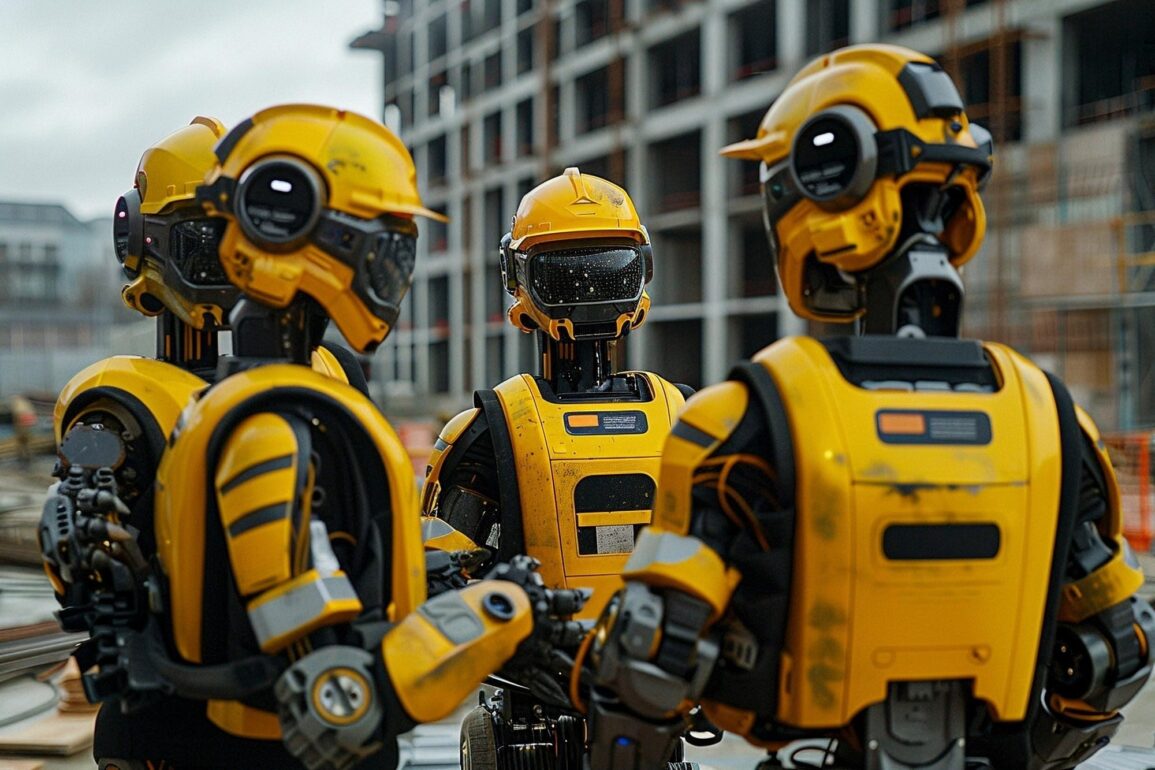

If you’ve been following tech news at all in early 2026, you’ve probably seen the headlines: humanoid robots are everywhere. Videos of them folding laundry, walking warehouses, or even doing backflips. It feels like overnight we went from clunky prototypes to machines that might actually join the workforce soon. The words around “physical AI” – basically AI brains in real robot bodies are real, and it’s moving fast.
But let’s cut through the hype. What’s actually realistic for humanoid robots in warehouses by the end of this year? And what about homes? Let’s take a no-BS look based on what’s happening right now in March 2026.
First, a quick explainer: Physical AI means robots that don’t just follow fixed paths like old-school factory arms. They use advanced AI (often agentic stuff that plans steps, learns from watching humans, or handles surprises) to move, grab things, and work in messy, human-designed spaces. Humanoids are robots with two arms, two legs, a torso, and a head-like part are perfect for this because our world is built for people: stairs, doors, shelves at human height, tools made for hands.
In warehouses, that’s huge. Think Amazon or big logistics spots full of boxes, totes, and narrow aisles. Traditional robots (like wheeled pickers) do okay in structured areas, but they struggle when things get unpredictable like a fallen box or a weirdly shaped item. A humanoid can bend, reach, walk around obstacles, and even use human tools if needed.
So, timeline for warehouses:
Right now (early 2026), we’re mostly in the pilot and small deployment phase. Companies like Agility Robotics have their Digit robot (it’s humanoid-ish, bipedal legs) moving totes in places like GXO warehouses. They’ve handled hundreds of thousands already in real ops since 2024/2025. Figure AI is testing Figure 02/03 at BMW factories for assembly tasks, and they’ve shown multiple bots roaming their HQ autonomously. Boston Dynamics’ new electric Atlas is shipping pilots to Hyundai and others for material handling and sequencing car parts, deployments started rolling out in months, not years.
Tesla’s Optimus is running inside their own factories (thousands projected this year), learning tasks by watching videos or humans, and aiming for external sales in 2026.
Chinese companies (Unitree, others) are pushing hard too. Some sanitation bots and enterprise trials with hundreds evaluating.
By late 2026? Experts say we’ll see scaling up. Not millions, but hundreds to low thousands in real warehouses and factories. Pilots turn into bigger fleets: more Figure bots in auto plants, Agility in logistics, maybe Optimus or Atlas in select high-value spots. Costs are dropping fast, from $35k+ per unit down toward $20k–$30k range for some models. That’s cheaper than a full-time human worker’s annual salary in many places.
But full “lights-out” warehouses with swarms of humanoids running 24/7? Not yet. Most predictions say true mass, unsupervised deployment in big warehouses is still 2–5 years out (2028–2030ish). 2026 is the year of serious pilots expanding, data collection exploding, and companies proving ROI on repetitive tasks like picking, sorting, palletizing, or inspection. Hybrid setups like humanoids handling flexible jobs while fixed robots do the boring stuff, will grow a lot.
Now, homes? That’s farther out, but not impossible to see early signs by late 2026.
1X Technologies’ NEO is one of the first aimed straight at homes. Preorders open, first deliveries planned for 2026. It’s designed for household help: laundry, cleaning, simple chores. Tesla talks about Optimus in homes eventually (consumer price $20k–$30k target), but external sales start with businesses in 2026, homes maybe 2027+.
Figure and others are eyeing home use too, with CEOs saying long-horizon tasks in unseen environments could happen by the end of 2026. But realistically, home deployments in 2026 will be limited: early adopters, rich folks, or tech enthusiasts getting the first units. Safety, reliability in chaotic home settings (kids, pets, stairs), battery life, and privacy (always-watching cameras/mics) need more work.
Mass home adoption? Probably 2027–2030, once prices drop below $20k, they prove safe and useful for real daily tasks, and regulations catch up.
Why does the acceleration feel so hard right now? AI brains got way better. Models learn tasks from video, plan multi-step actions, recover from mistakes. Hardware improved: better batteries, stronger actuators, cheaper sensors. Companies raised billions, built factories, and shifted from demos to real testing.
Challenges remain: Robots still mess up in edge cases, need supervision, safety is expensive, and integrating with existing workflows takes time. But 2026 is the pivot year, from “cool prototype” to “actually useful in paid pilots.”
Bottom line: By late 2026, expect to see humanoid robots in more warehouses doing real work (hundreds to thousands deployed, focused on logistics and manufacturing). Homes? A handful of early models shipping to customers, mostly as expensive experiments or luxury helpers. The revolution is starting, but it’s gradual, not robots taking over overnight.
If you’re in logistics, manufacturing, or just love tech, keep an eye on Figure, Agility, Boston Dynamics, Tesla, and 1X. This year could be when physical AI stops being future talk and starts being part of everyday ops. Exciting times ahead. Just don’t expect your home robot to cook dinner perfectly by Christmas 2026. Yet.