
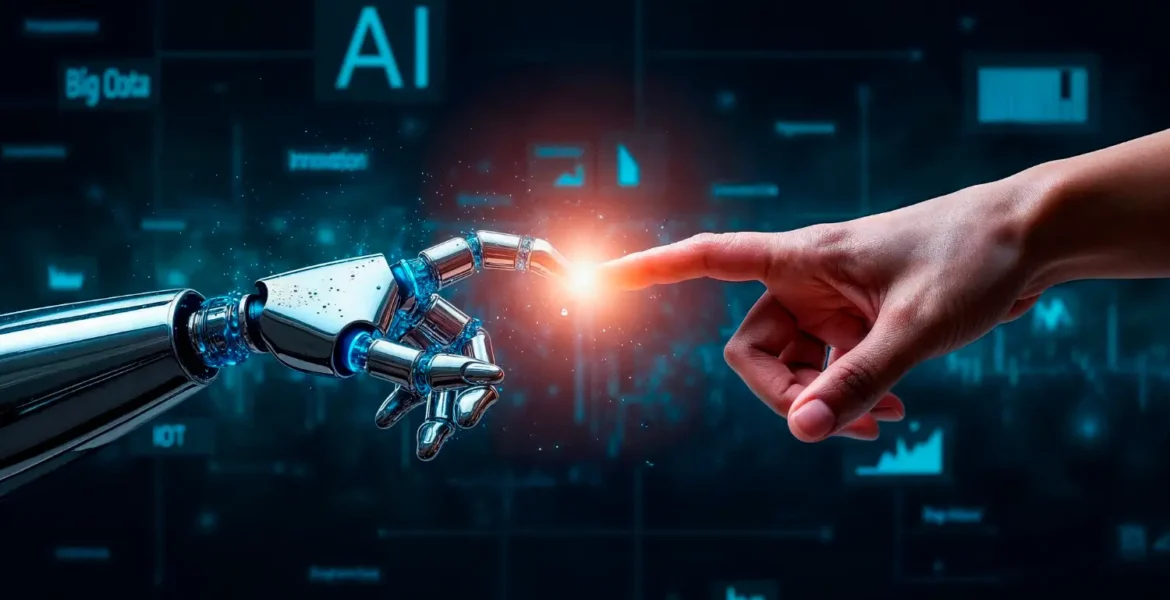
Artificial intelligence is no longer limited to research labs or experimental systems. It is now embedded in everyday applications such as digital assistants, recommendation engines, smart home devices, and automated customer support platforms. Organizations across industries are investing heavily in AI-driven tools to improve efficiency, accuracy, and decision-making. As computing capabilities expand and data becomes more accessible, artificial intelligence will continue to shape the next generation of innovation in tech.
AI and the Transformation of Work
The workplace is experiencing a major shift as AI automates repetitive and time-consuming processes. Tasks such as data entry, scheduling, inventory tracking, and basic customer interactions are increasingly handled by intelligent systems. This transformation allows employees to focus on strategic thinking, creative tasks, and human-centred roles that require empathy and judgment. While some traditional jobs may decline, new opportunities are emerging in areas such as AI management, data science, automation engineering, and digital strategy.
Healthcare Revolution Through Artificial Intelligence
Healthcare is one of the sectors benefiting the most from artificial intelligence. Machine learning algorithms can analyse medical images, predict disease risks, and assist doctors in diagnosing conditions more accurately. AI-powered monitoring devices can track patient health in real time, providing early warnings that help prevent severe complications. In the future, personalized treatment plans based on genetic data and lifestyle patterns may become standard practice, improving survival rates and quality of care worldwide.
Business Intelligence and Smarter Decision-Making
Businesses are using AI to analyse customer behaviour, forecast demand, and optimize supply chains. Advanced predictive tools help companies identify trends earlier and make more informed decisions. Innovation in tech continues to drive intelligent analytics systems that reduce operational costs while improving customer experiences. Organizations that effectively integrate AI into their strategies are more likely to remain competitive in rapidly changing markets.
Pros of Artificial Intelligence
Artificial intelligence offers several advantages that make it one of the most transformative technologies of modern times:
- Higher efficiency: Automated systems can complete repetitive tasks faster and with fewer errors.
- Improved accuracy: AI can process vast amounts of data and identify patterns that humans might miss.
- 24/7 availability: Intelligent systems can operate continuously without fatigue.
- Better decision support: Predictive analytics helps businesses and governments make data-driven choices.
- Innovation acceleration: AI enables new products, services, and research breakthroughs across industries.
Cons of Artificial Intelligence
Despite its benefits, AI also presents several challenges that must be addressed responsibly:
- Job displacement concerns: Automation may reduce demand for certain roles, requiring workforce reskilling.
- Data privacy risks: Large-scale data collection can raise concerns about security and personal information misuse.
- Algorithmic bias: Poorly designed systems may reflect biases present in training data.
- High implementation costs: Developing and maintaining advanced AI systems can require significant investment.
- Dependence on technology: Overreliance on automated systems may reduce human oversight in critical situations.
Ethical Considerations and Responsible Development
As AI adoption grows, ethical considerations become increasingly important. Governments, research institutions, and technology companies are working to establish guidelines that ensure fairness, transparency, and accountability in AI systems. Responsible development practices will play a critical role in building public trust and ensuring that artificial intelligence benefits society as a whole rather than creating inequality or misuse.
Future Opportunities Created by Artificial Intelligence
Artificial intelligence is expected to open new possibilities across industries, creating innovations that were once considered impossible. Smart transportation systems, AI-powered environmental monitoring, advanced robotics, and intelligent financial services are just a few examples of upcoming developments.
Startups and large organizations alike are investing heavily in AI research to develop solutions that improve productivity, sustainability, and global connectivity. As adoption continues to expand, professionals with AI-related skills will find increasing career opportunities, while businesses that leverage intelligent technologies will gain a competitive advantage in the rapidly evolving digital economy.
Conclusion
The future of artificial intelligence is filled with opportunities and challenges. From smarter healthcare and personalized education to advanced automation and predictive analytics, AI will continue to transform nearly every sector of society. Organizations and individuals who adapt to this technological shift by learning new skills and embracing innovation will be better prepared for the evolving digital landscape. With responsible governance and continuous research, artificial intelligence has the potential to drive economic growth, improve quality of life, and solve some of the world’s most complex problems.